Sunday, January 10, 2021
R value of soft wood
Friday, December 25, 2020
insulated hive wrap and cloake board stack
In Atlanta, cold 20°F temperatures arrived on Christmas Day and the ensemble of 11 arctic oscillation forecast a large negative downturn. I used these metrics as significant evidence that winter temperatures are here to stay. Since 2010, I have reused my NOD Bee Cozy R8 insulated hive wraps and believe hive wraps improved the chance of overwintered bee hive survival. As a lazy (aka stubborn) beekeeper and despite warm winter fluctuations, I'll leave the Bee Cozy on till spring 2021.
Photo shows joined hives - overwintered hive below and a March 23rd spring swarm capture above an open Cloake Board. The bee cozy is designed for 10-frame equipment, so it easily slipped over the Bloake Board without removing 8-frame boxes.
I'm encouraged to see warm moist air (bee respiration) condense outside the hive at the top vent and Cloake Board Entrance.
Here are current the hive elements:
- screen bottom board with no counting board insert
- NOD Bee Cozy R8 insulated hive wraps surrounding the May 25 hive reorganization
- inner cover with top notch up ventilation
- two 3/4 inch sheets of XPS foam board insulation between inner cover and telescoping cover
- white corrugated plastic sheet overhang
- concrete pavers on top
Sunday, November 24, 2019
2019 Bee Cozy
Ants create tunnels and nest in the extruded polystyrene foam boards in warmer weather, so I postponed insulating the hives until now. In Atlanta, first frost arrived on November 12th which is just on the early side of historical average. November 12 also marked the first subtle Arctic Oscillation downturn this winter.
Here are current the hive elements:
- screen bottom board with no counting board insert
- bee cozy hive wrap surrounding the August hive down-sizing
- inner cover with notch up ventilation
- two 3/4 inch sheets of XPS foam board insulation between inner cover and telescoping cover
- white corrugated plastic sheet overhang
- concrete bricks on top
Friday, March 15, 2019
bee respiration with and without Bee Cozy
In the graph notice:
- all points are consistently closer to the upper left corner with the Bee Cozy
- hive #1 has top vent temperatures as large as 80 ℉ and consistently warmer than hive #2
- the last measurement (blue circle with fill) is consistently closer to the upper left corner than other graph points.
Monday, July 16, 2018
with and without Bee Cozy hive wrap
IR temperature measurements started on 12-Nov-2017 without the Bee Cozy. See a previous post, bee respiration, for measurement method. On 2-Jan-2018, the 17.0°F outdoor temperature convinced me to add the Bee Cozy to two vertically stacked hives. Only the queen excluder portion of a cloake board separate these hives. 1 Bee Cozy is added to the bottom hive (4 boxes) and 2 overlapping Bee Cozys are added to the top hive (5 boxes). The Bee Cozy is designed for 10 frame equipment. So, the Bee Cozy easily slips over my 8 frame boxes and cloake board with no effort. This 2-Jan-2018 measurement point appears as a blue dot in the lower left corner of dots - Paver temperature equals 17.0°F and Top Vent temperature equals 31.0°F. On the graph, think of the horizontal axis as outdoor temperature and vertical axis as the bee respiration temperature.
All graph points lie above the green line (x= y) which is consistent with an active and alive hive. Blue dots are measurements without the Bee Cozy and trend beneath orange dots which are measurements with the Bee Cozy. Excluding a few points, the Bee Cozy consistently increases bee respiration (Top Vent) temperature.
Wondering why I went into winter with such a tall stack of boxes which requires step ladder beekeeping - there's no good reason other than lazy beekeeping.
Wednesday, January 4, 2017
Arctic Oscillation Jan '17
Listed from the bottom upwards, here are the hive elements at this time.
- screen bottom board with no counting board insert
- bee cozy hive wrap surrounding the late August hive re-sizing
- inner cover with top notch ventilation
- two 3/4 inch sheets of XPS insulation
- telescoping cover
- white over-hanging corrugated plastic sheet
- concrete pavers
Saturday, January 2, 2016
Arctic Oscillation & Bee Cozy Hive Wrap
- screen bottom board with no counting board insert
- bee cozy hive wrap surrounding the June-July hive re-sizing
- inner cover with top notch ventilation
- two 3/4 inch sheets of XPS insulation between inner cover and telescoping cover
- white corrugated plastic sheet overhang with concrete pavers on top
Sunday, October 31, 2010
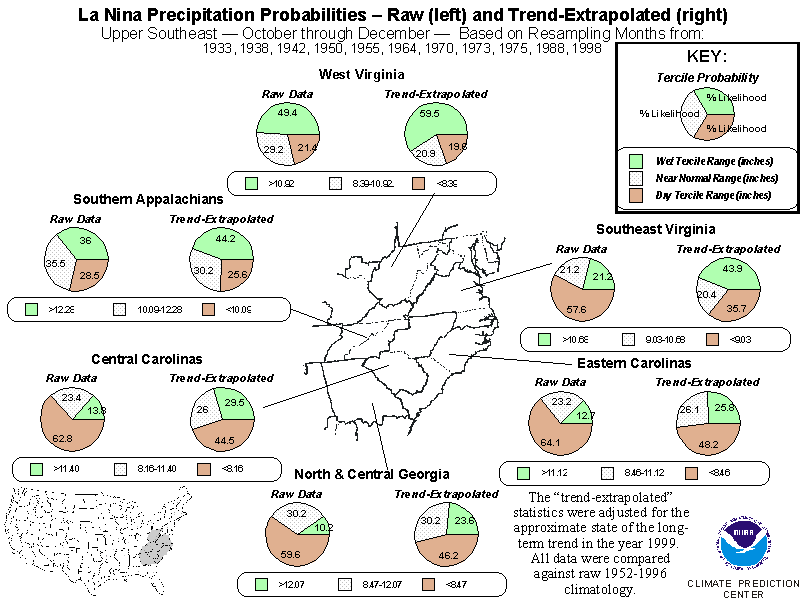
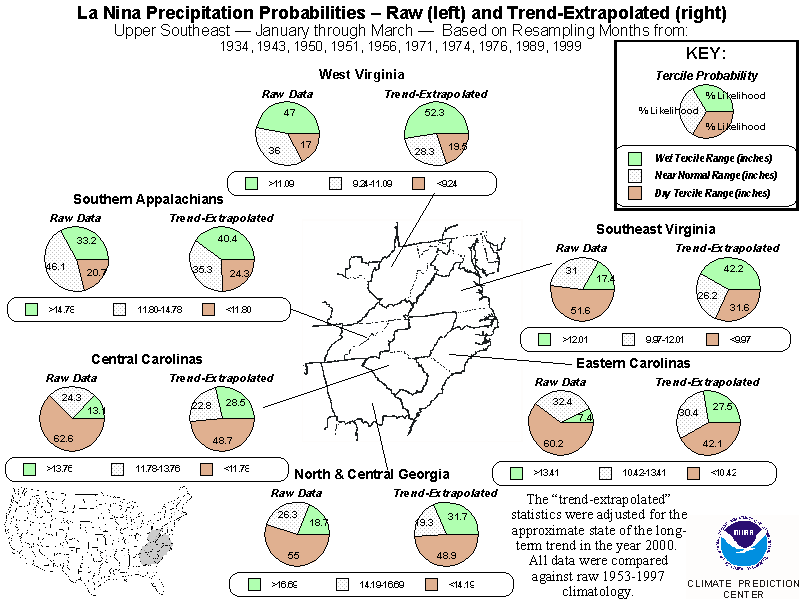
La Niña pattern
Cold surface water in the equatorial pacific may result in a warmer and dryer Atlanta winter. See the links to the official forecast:
- David Emory Stooksbury "It is too early to tell exactly how the La Niña pattern will impact Georgia"
- NOAA Wet Season 2010/2011 Outlook
- NOAA Upper SE La Niña precipitation probabilities October-December
- NOAA Upper SE La Niña precipitation probabilities January-March