
From the parent hives I removed eggs, capped worker brood, pollen and bees and one of two splits achieves a mated queen. Not bad for a new-bee, but I have to credit the favorable spring weather and drones from local hives. Here's a summary of what went on with the two splits.
 April 6th (day 20) with help from a visiting friend, Ray Karsch, we move the splits which have been sitting on top of their parent hive with the same entrance orientation. Without a cinch strap we gently stack both splits onto the same hive stand. Each split has their own deep division board feeder and the bottom split has a counting board to keep them warm. The top split is taking syrup while the bottom split is not. April 12th (day 26), bees return to the top split with pollen, while no pollen is found on the counting board of the bottom split. April 6th (day 30), I simply combine splits into a two deep box configuration. I'm convinced that one split contains a mated queen based on pollen foraging and syrup consumption.
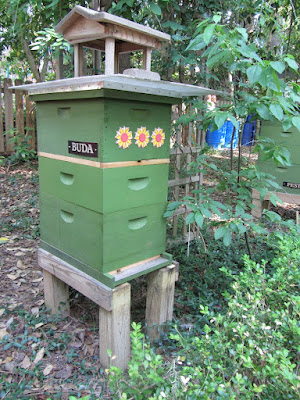
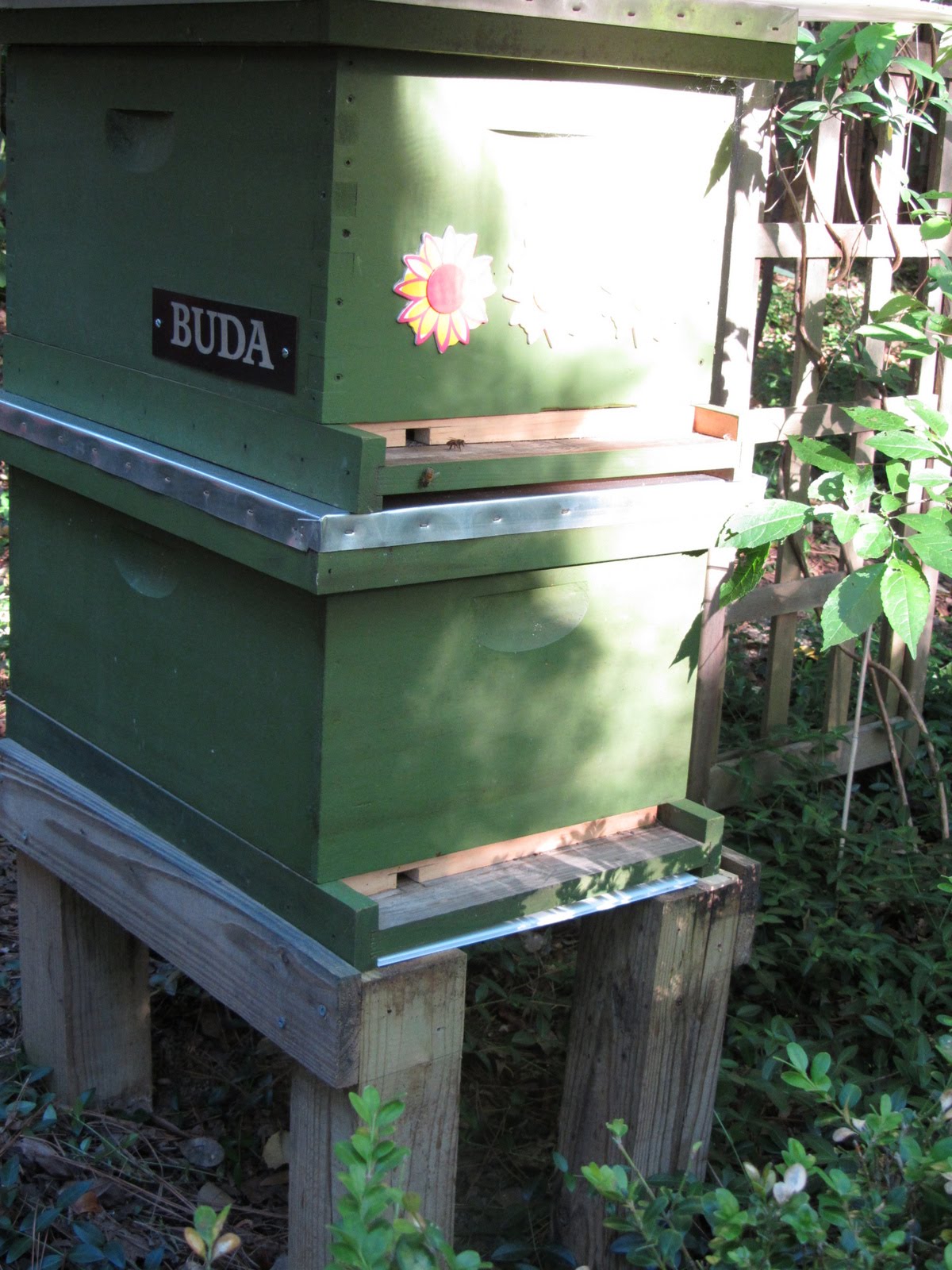
April 23rd, I discover all the bees in the lower box, so I squeeze the resources into one deep box with a division board feeder. May 1st, I remove the deep division board feeder. Next I add a medium box with one frame of capped honey (bait frame from parent hive) and seven medium frames with wax strips. Above the inner cover I invert a one gallon pail and remove the counting board.
April 23rd, I discover all the bees in the lower box, so I squeeze the resources into one deep box with a division board feeder. May 1st, I remove the deep division board feeder. Next I add a medium box with one frame of capped honey (bait frame from parent hive) and seven medium frames with wax strips. Above the inner cover I invert a one gallon pail and remove the counting board.


